Concrete Curbing for Sloped Yards: Erosion Control That Works in St. Charles County, MO
Concrete curbing for slopes creates a continuous barrier that redirects water while holding soil, mulch, and rock in place on graded landscapes. Clay soils and heavy spring rains make St. Charles County slopes especially vulnerable to washout.
Most homeowners on sloped lots blame heavy rain for their mulch washing downhill. The rain is the trigger, but the real problem is an unsecured landscape border that gives water a clear downhill path with nothing to slow it. Step Above Curbing installs slope-specific curbing layouts across eastern Missouri and explains the optimal approach below.
Why Slopes Erode in Eastern Missouri
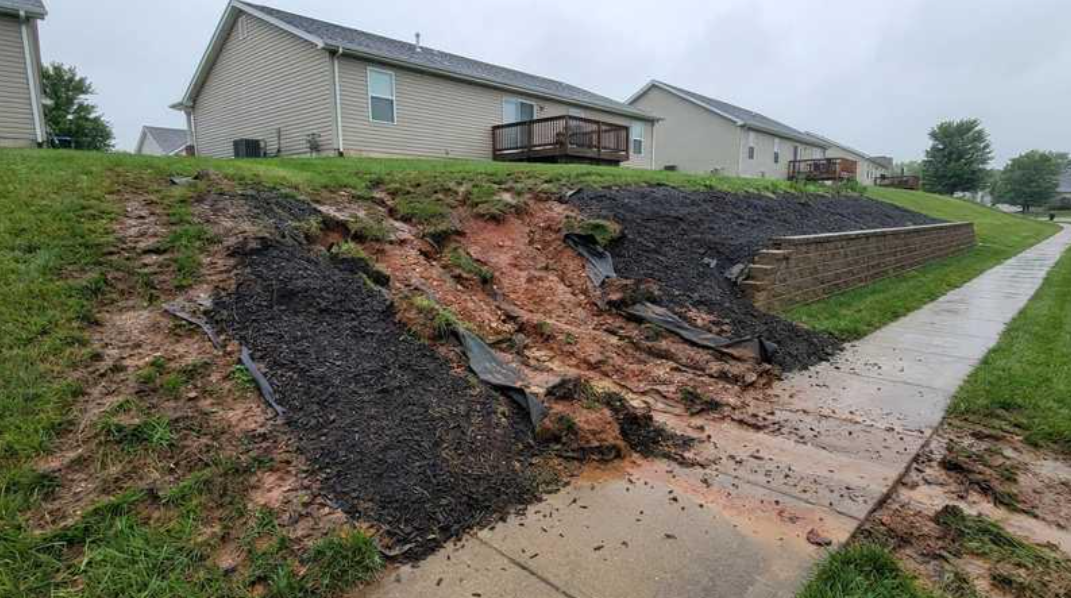
Clay soil dominates St. Charles County yards, and it behaves differently on a grade than sandy or loamy soil. When saturated by spring rain, clay becomes slick and loses friction. Water sheets across the surface instead of absorbing, and on a slope, that sheeting carries everything loose: mulch, topsoil, decorative rock, and shallow plant roots.
Wentzville, O'Fallon, and Lake St. Louis neighborhoods built on rolling terrain see this pattern every April and May. Standard plastic or metal edging can't hold position on a grade because stakes pull loose as saturated clay shifts underneath. The edging moves, and the mulch follows.
Concrete landscape curbing solves this by anchoring directly into the prepared soil base without relying on stakes. Its continuous profile acts as a low retaining wall that slows water velocity and traps material behind it.
How Concrete Curbing Controls Erosion on a Grade
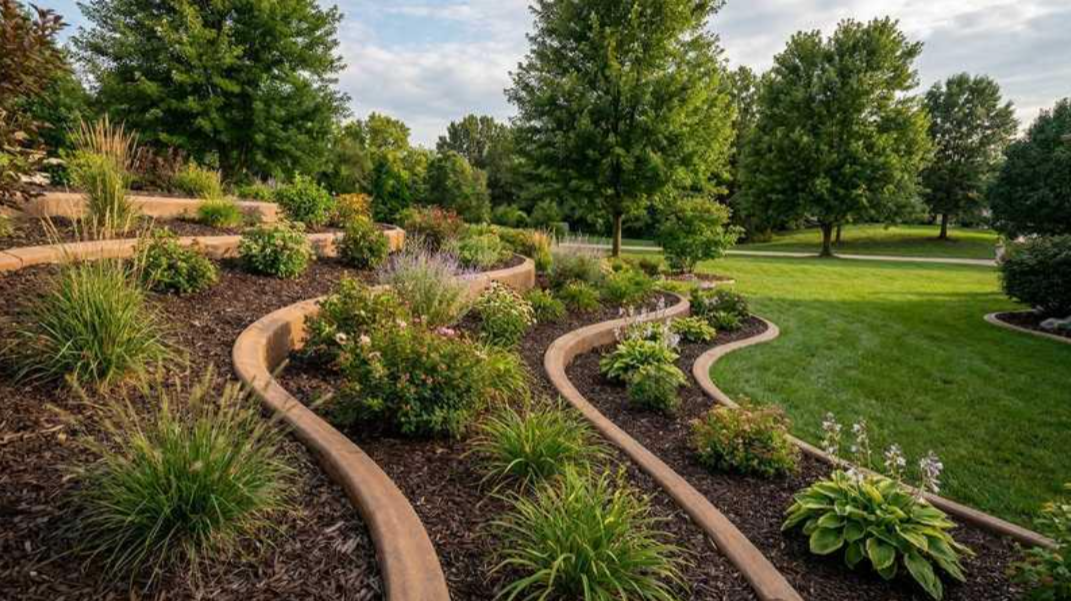
Curbing installed along the contour of a slope creates terraced zones that break water's momentum before it reaches the bottom of the grade. Instead of one long run of water gaining speed, each curb line forces the flow to slow, drop sediment, and redirect.
Strategic Placement
Step Above Curbing's installation process starts with a layout consultation where the crew maps water flow paths across the slope. Curb lines follow the natural contour rather than running straight downhill, which would channel water instead of slowing it. On steeper grades, multiple curb tiers spaced several feet apart create a stepped effect that controls runoff at each level.
Material Advantages on Grades
The fiber-reinforced, polymer-enhanced concrete formula resists the shifting pressure that Missouri clay exerts on a slope. Monolithic extrusion with no joints eliminates weak points where water could undercut the border and wash through. Homeowners who've tried other edging types on grades often switch to concrete after one rainy season proves the difference.
Pairing Curbing with Rock and Drainage
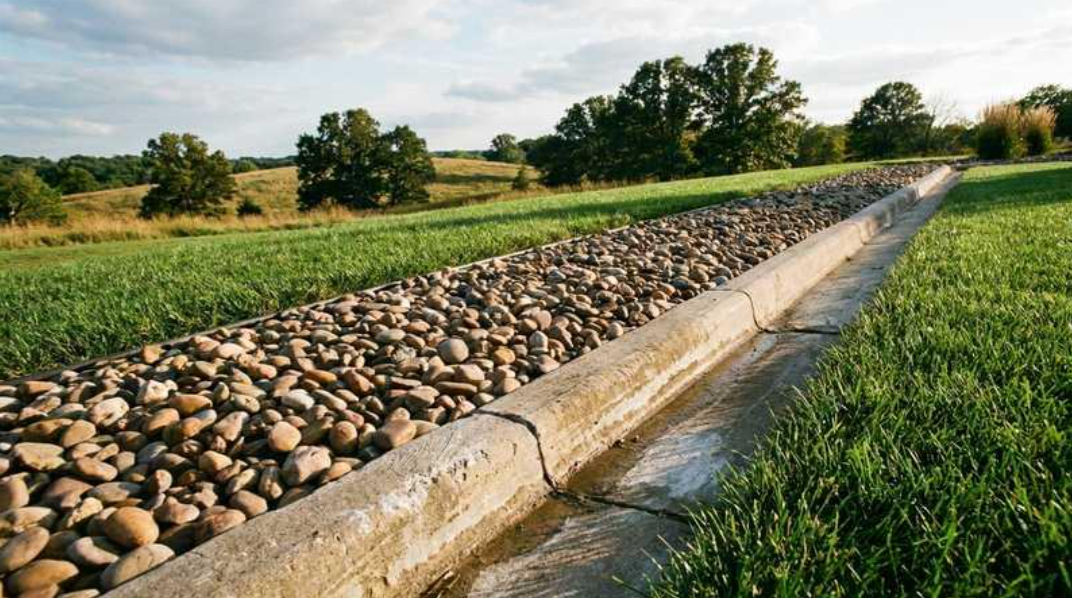
Concrete curbing works best on slopes when combined with the right fill material and drainage planning. Heavy mulch washes out on steep grades even with curbing, but rock and stone landscaping stays put because runoff can't move material that heavy.
River rock or natural stone behind concrete curb lines on a slope creates a self-draining, low-maintenance landscape bed that handles Missouri's heaviest spring storms. The curbing contains the rock while water filters through gaps between stones and absorbs into the soil below.
For steeper slopes, adding a French drain behind the curbing intercepts subsurface water before it saturates the clay and creates the slick conditions that cause surface erosion in the first place.
Frequently Asked Questions
Does concrete curbing work on steep slopes?
Concrete curbing works on moderate to moderately steep grades when installed along natural contour lines. For very steep slopes, tiered curb lines spaced across the grade create a terraced effect that controls water at each level. Step Above Curbing assesses slope angle during the free on-site estimate to recommend the right layout.
How does curbing prevent mulch from washing downhill?
The continuous concrete barrier acts as a low retaining wall that physically blocks mulch from migrating downslope during rain. Unlike plastic edging that gaps and lifts on grades, concrete curbing maintains its position in clay soil because it distributes pressure across the full border length without stakes.
Is concrete curbing enough for erosion control on slopes?
Concrete curbing handles surface-level erosion by slowing water velocity and containing landscape material. For severe erosion with subsurface water issues, pairing curbing with a French drain and heavier fill material like river rock provides comprehensive protection that addresses both surface runoff and groundwater movement.
Protect Your Slope Before the Next Storm
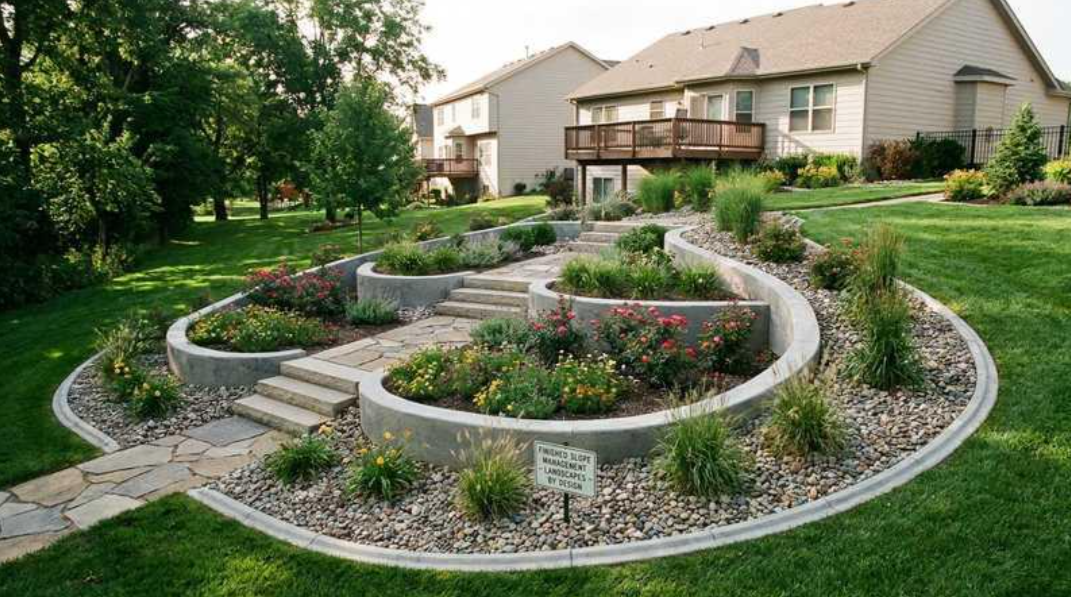
On a sloped yard, every rainy season without proper edging means replacing mulch, losing topsoil, and repairing plants damaged by runoff. Concrete curbing installed along the contour of a grade slows the water down and gives your landscape material a permanent border to stay behind. The longer you wait, the more the slope erodes and the more expensive the fix becomes.
Contact Step Above Curbing at (636) 290 8380 for a free slope assessment and an estimate on your property.