
7 Rock Landscape Edging Ideas for a Polished Yard
If you’re considering rock edging, you’re likely asking: Which rock works best? Will it stay put through our Midwest freeze–thaw cycles? And how do I keep it neat next to the lawn? We’re answering those questions head-on and sharing seven proven ideas that look great and last in eastern Missouri.
As a local team based in Silex, MO, Step Above Curbing designs edges that handle clay soils, heavy rains, and HOA-friendly aesthetics. Whether you’re searching for rock landscape edging ideas or simply want practical, low‑maintenance borders, we’ll show you where rock-only edges shine, when pairing stone with concrete curbing makes sense, and how to avoid shifting, weeds, and washouts.
7 Rock Landscape Edging Ideas That Work in Missouri
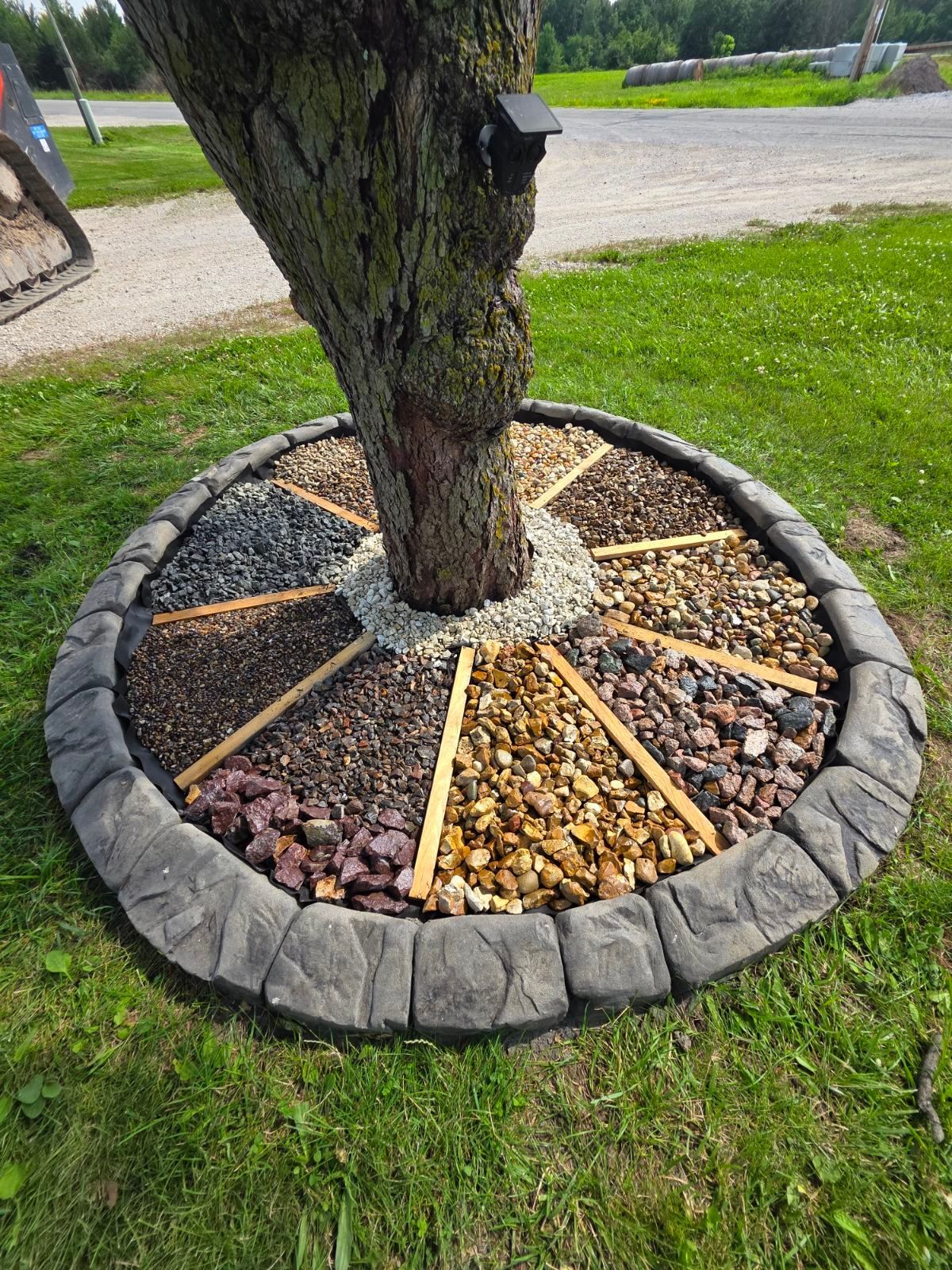
Each of these ideas balances curb appeal, function, and durability while standing up to Missouri’s clay soils and freeze–thaw cycles.
1. River Rock Ribbon with a Concrete Mowing Strip
A band of rounded river rock contained by a cast-in-place mowing strip creates a clean, low-maintenance edge. The concrete acts as an edge restraint to prevent stone from migrating into your lawn, while the smooth radius makes trimming fast. Set the curb slightly proud of grade, lay geotextile fabric, and use 1 to 2-inch rock for stable coverage and solid drainage.
2. Flagstone “Soldier Course” Around Garden Beds
Dry-laid flagstone set on a compacted aggregate base forms a natural, timeless border. Tight joints filled with polymeric sand resist weed growth and lock stones in place through freeze–thaw cycles. Vary rock sizes for an organic look, and keep a 2 to 3-inch reveal above mulch to prevent spillover onto paths.
3. Cobblestone Border Framing Gravel Driveways
Granite or concrete cobbles installed as a perimeter “curb” keep driveway gravel from spreading into turf and planting beds. In Wentzville or O’Fallon, where storms can be intense, bedding cobbles on mortar over a compacted base helps resist washouts. Keep the top of the cobbles level with the driveway so tires roll over smoothly without catching.
4. Crushed Granite Path with Steel or Concrete Edging
Decomposed or crushed granite compacts into a firm, well-draining surface. Pair it with powder-coated steel edging for crisp modern lines, or with a low-profile concrete curb for added holding power on slopes. Lightly wet the granite as you go, pack it down in 2–3 inch layers, and create a gentle high point in the middle so rainwater drains to the sides.
5. White Marble Chips to Brighten Shade Gardens
In dense shade where mulch stays damp, marble chips bounce light into the space and create contrast against dark foliage. Use a breathable base and landscape fabric to minimize soil mixing; blow or rake leaves regularly to prevent staining. A darker border (steel or concrete) helps visually and physically contain the bright stone.
6. Lava Rock Around Foundation Plantings
Lightweight and long-lasting, lava rock is a low-maintenance mulch alternative around shrubs and AC pads. Its porous structure discourages compaction and promotes airflow around plant crowns. Include a simple steel or concrete edge to keep pieces from drifting into lawn areas, and avoid piling stone directly against siding or stem walls.
7. Boulders and Outcroppings on Gentle Slopes
The strategic placement of boulders creates mini-terraces that slow runoff and anchor beds. Combine with smaller river rock or cobble to tie grades together and control erosion without looking engineered. Stagger sizes for a natural effect. Seat each boulder at least one-third below grade so it feels “planted,” not perched.
Explore our Gallery for more landscaping ideas like these.
Work With Step Above Curbing for Clean, Long-Lasting Edges
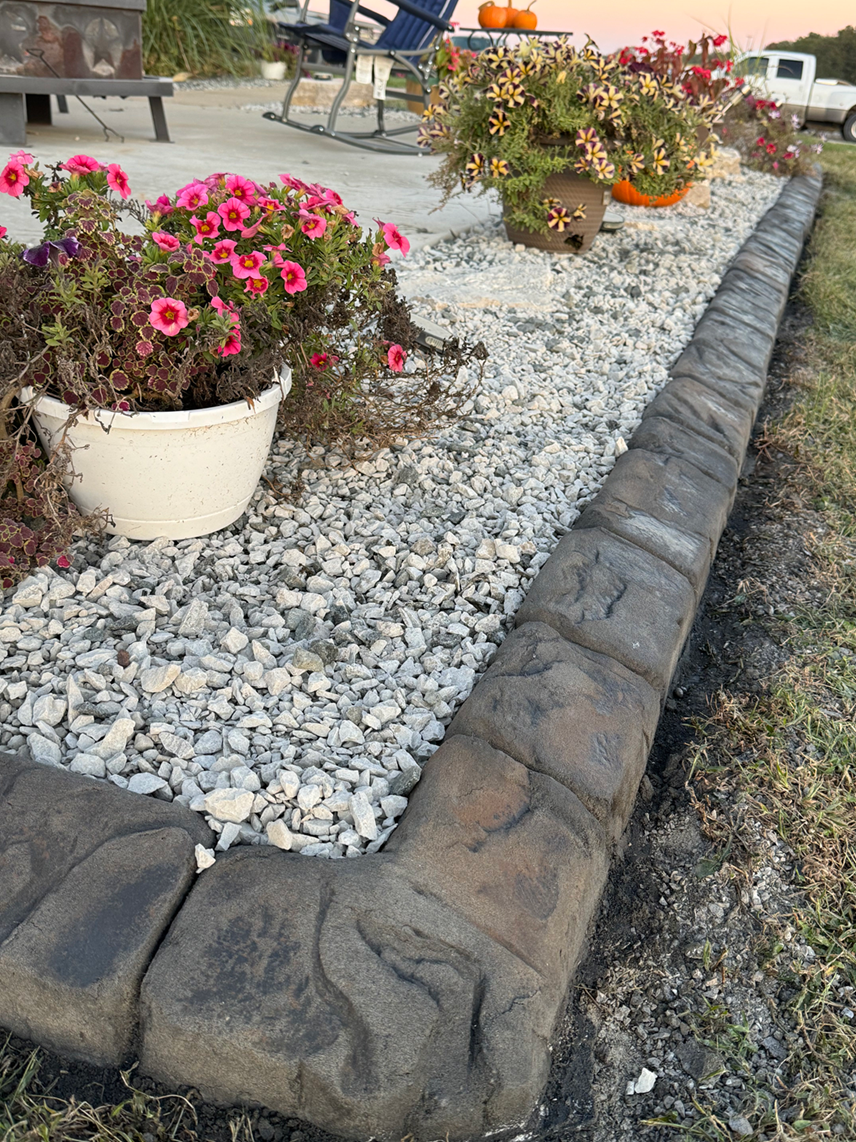
Great results come from smart design, proper base prep, and reliable containment—especially with our clay soils and freeze–thaw patterns. Pairing stone with rock edging and edge restraint delivers the crispest lines and the least weekend maintenance.
Ready to clean up your bed lines? Start by measuring your borders, choosing a rock size and color that complements your home, and deciding whether a mower edge or a steel restraint best fits your goals. If you’d like a tailored plan, we’re here to help. Our team tailors borders to handle heavy rains, manage runoff away from foundations, and resist heaving so your edges stay tidy year after year.
Here’s our typical process: a quick site visit to assess grades, downspouts, and soil; rock selection that complements your home; a compacted aggregate base with a weed barrier fabric; and an edge solution that fits your mowing style and budget. We can recommend rock blends that won’t migrate, set the right base depth, and design a border that suits your lawn and plantings. Contact Step Above Curbing to schedule a quick consult and get a straightforward estimate.