
6 Inexpensive Landscape Edging Ideas for Beautiful Gardens on a Budget
Last spring, a Wentzville homeowner's garden beds looked sharp in April. By July, the plastic edging had buckled in three places. By October, it had shifted enough that the lawn mower clipped it on every pass.
Step Above Curbing works with St. Charles County homeowners who started with a budget solution and ended up doing the job twice. This guide covers six inexpensive landscape edging ideas and explains where each one faces real limits in Missouri's conditions.
Why Most Budget Edging Fails After One Missouri Winter
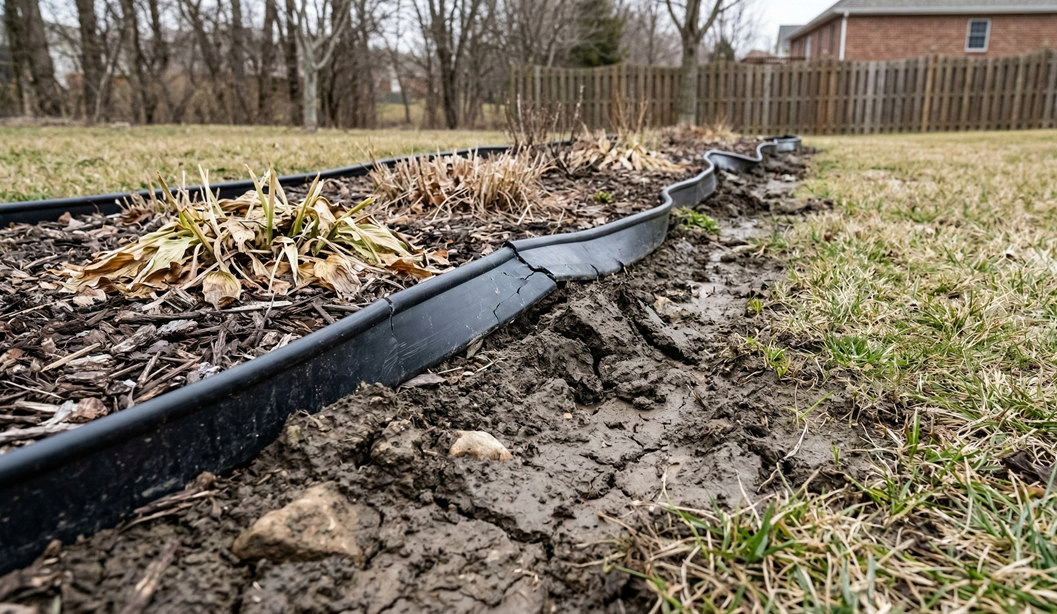
Understanding why edging fails here is the first step toward choosing something that actually holds.
Eastern Missouri's clay soils expand when wet and contract when dry. That movement pushes edging out of the ground gradually, even when it was installed correctly. Add in the freeze-thaw cycling St. Charles County sees from November through March, with temperatures crossing above and below freezing dozens of times per winter, and lightweight materials get heaved and cracked repeatedly. For a deeper comparison by yard type, the best types of landscape edging for Missouri yards covers each scenario in detail.
Six Inexpensive Landscape Edging Ideas
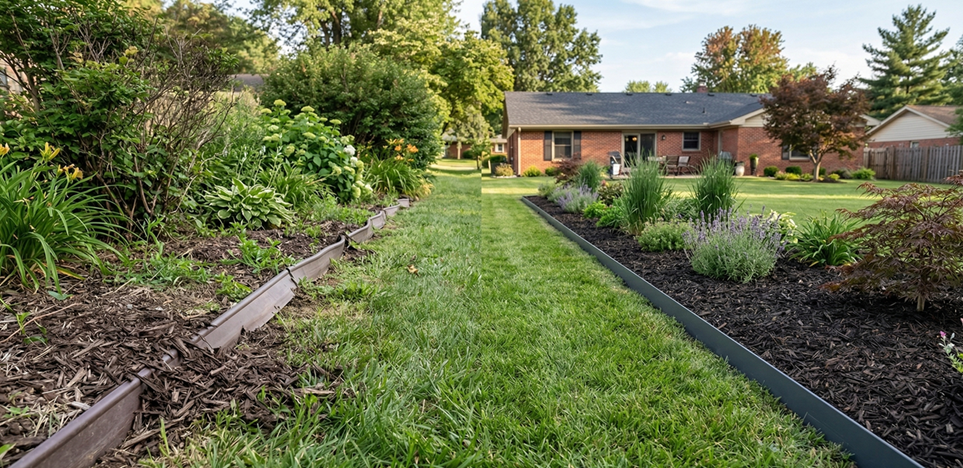
These options can work, but each has real tradeoffs worth knowing before you buy.
1. Natural Stone or Brick Border
Flat fieldstones, bricks, or pavers set along a garden bed cost $1 to $3 per linear foot in materials. They look natural and any homeowner comfortable with a shovel can install them.
The limitation in Missouri's clay soil is settling. Without a compacted gravel base, individual stones can shift and sink unevenly after a wet spring, making the look go from intentional to neglected faster than most homeowners expect.
2. Steel or Aluminum Edging
Metal edging runs $1.50 to $4 per linear foot and holds cleaner lines than plastic. Aluminum won't rust. Steel handles curves more reliably. Both handle freeze-thaw cycles better than rigid plastic because they flex without cracking.
The trade-off: the anchoring stakes can work their way up through the soil over time, leaving visible spikes that catch mower blades. You’ll need to check and reset them every spring.
3. Landscape Timbers or Railroad Ties
Treated wood edging costs $1 to $3 per linear foot. It works well for straight-run borders along driveways or raised beds. It holds mulch effectively.
The honest downside is longevity. Treated wood in direct contact with Missouri’s clay soil often shows significant rot within 5 to 8 years. However, it’s a reasonable short-term fix if budget is the primary constraint.
4. Rubber or Recycled Edging
Rubber edging made from recycled tires runs $1 to $2 per linear foot and handles curves well. It won't rot or rust, and it performs better than rigid plastic in freeze-thaw conditions because it bends rather than cracks.
The visual result is utilitarian—a practical fit for back-garden beds, less so for front yards where curb appeal matters.
5. Concrete Mowing Strip (DIY Poured)
A DIY concrete strip—4 to 6 inches wide, 3 to 4 inches deep—costs roughly $2 to $4 per linear foot in materials. When done with proper base prep and compaction, it's one of the most durable budget options available.
The challenge is execution. Achieving clean curves, consistent depth, and a finished surface without professional equipment takes real skill. For straight runs along driveways, it's achievable. For curves around natural garden beds, results are often uneven.
6. Professionally Installed Concrete Curbing
For homeowners who are tired of periodically replacing edging, professional concrete curbing runs $5 to $15 per linear foot depending on the complexity of the design. It's a higher upfront cost, but it's one of the few options that offers a continuous, seamless barrier with no joints, seams, or individual pieces that shift or heave.
For a full breakdown of what curbing costs in this area, the landscape curbing cost guide forMissouri homeowners covers the price factors in detail.
Ready To End the Replacement Cycle?
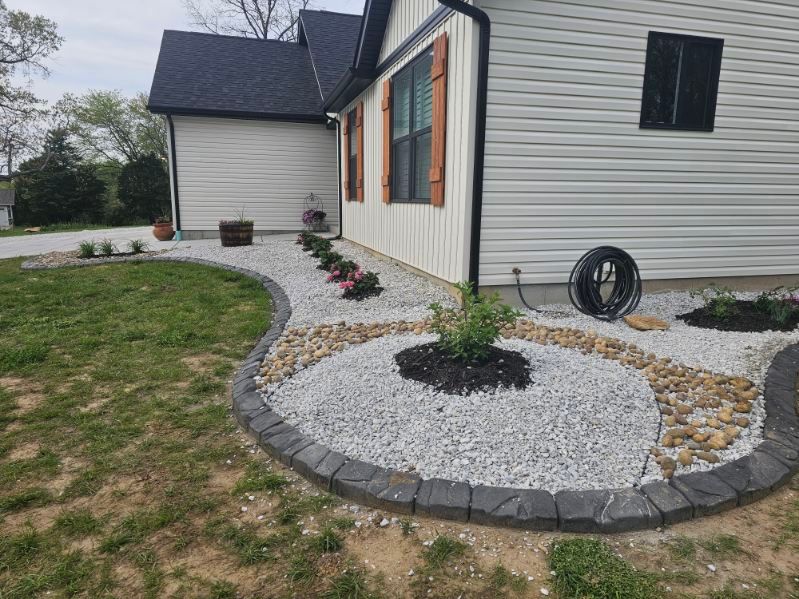
The real cost of budget edging isn't the sticker price; it's how many times you end up paying it.
Plastic edging in Missouri conditions often lasts 2 to 4 years before buckling or cracking. Even metal stakes need annual resetting. Landscape timbers degrade in under a decade. If you're replacing $200 worth of edging every 3 to 4 years, the ten-year expense isn’t that far from what a permanent concrete installation would cost once—with none of the maintenance.
If budget is limited, steel or aluminum edging offers the best durability for the price. If you're ready to stop repeating the process, concrete curbing ends the cycle.
Step Above Curbing serves Wentzville, O'Fallon, Lake St. Louis, and surrounding St. Charles County communities with decorative concrete curbing installed in 1 to 2 days, backed by a comprehensive warranty.
Request a free estimateand get a specific price for your property before making a commitment.